38 is country of origin required on food labels
Country-of-Origin Labeling for Foods and the WTO Trade ... - Congress Country-of-Origin Labeling for Foods and the WTO Trade Dispute on Meat Labeling Congressional Research Service Summary Since the final rule to implement country-of-origin labeling (COOL) took effect in March 2009, most retail food stores have been required to inform consumers about the country of origin of Country of origin food labelling | ACCC Country of origin food labelling If you sell or supply food for retail sale in stores, markets, online or from vending machines it is likely that you will be required to comply with the Country of Origin Food Labelling Information Standard 2016 (Standard). Types of food covered by the standard Label requirements The labels
CPG Sec. 560.200 Country of Origin Labeling CPG Sec. 560.200 Country of Origin Labeling BACKGROUND: A statement of the country of origin on the labeling of imported foods is not required by the Federal Food, Drug, & Cosmetic Act. This is a...

Is country of origin required on food labels
Country of origin food labelling | business.gov.au Country of origin labelling is not required on the following food products: foods not for human consumption (for example, pet food) foods sold in restaurants, cafes, take-away shops or schools foods sold at fundraisers foods sold from the same premises in which they have been made and packed. Marking of Country of Origin on U.S. Imports Acceptable Terminology and Methods for MarkingEvery article of foreign origin entering the United States must be legibly marked with the English name of the country of origin unless an exception from marking is provided for in the law. Country of Origin Marking - U.S. Customs and Border Protection This rule applies unless an importer has repeatedly violated the country of origin marking requirements after receiving written notification that the goods are required to be marked prior to importation. Canada, Mexico and the United States may impose special marking duties or penalties for repeated violations of country of origin marking ...
Is country of origin required on food labels. Country of Origin Labeling (COOL) Frequently Asked Questions Country of Origin Labeling (COOL) is a consumer labeling law that requires retailers (most grocery stores and supermarkets) to identify the country of origin on certain foods referred to as "covered commodities". Country of Origin Marking Requirements - PackagingLaw.com Under the Tariff Act of 1930, every article of foreign origin (or its container) imported into the U.S., unless exempted, must be marked in a manner that will indicate to the ultimate purchaser the article's country of origin. For example, goods originating in China must be marked, "Made in China" or "Product of China." Country of origin food label responsibilities - Queensland Country of origin food label responsibilities. The Country of Origin Food Labelling Information Standard 2016 (Standard) commenced on 1 July 2016 under the Australian Consumer Law (ACL). From 1 July 2018, if you are a business offering food products for retail sale in Australia, you must comply with the Standard. The type of label required for ... What Is Country of Origin Labeling? An Overview According to U.S. Customs and Border Protection (CBP), every article of foreign origin entering the U.S. must be legibly marked with the English name of the country of origin, unless an exception from marking is provided in the law. The country of origin is defined as the country of manufacture, production or growth of an article.
Country of origin on food labels - Canadian Food Inspection Agency In Canada, there are mandatory requirements for certain food products to indicate the foreign state (definition) of origin on their labels. Although foreign states include countries as well as World Trade Organization (WTO) members, the Industry Labelling Tool commonly refers to this requirement as country of origin labelling. A Brief History and Overview of Country of Origin Labeling Requirements Country of Origin Labeling (COOL) laws and regulations require retailers to notify their customers of the country of origin of covered commodities, which include beef, veal, lamb, chicken, fish and shellfish, goat, pork, perishable agricultural commodities, macadamia nuts, pecans, ginseng, and peanuts. Country of origin labelling for food products - Canadian Food ... The new FDR requirements are available in the Industry Labelling Tool. Food businesses have a transition period to meet them, during which they must comply with either the former or the new requirements. In Canada, there are mandatory requirements for certain food products to indicate the country of origin on their labels. Country of Origin Labeling: What Businesses Need to Know macadamia nuts. pecans. ginseng. peanuts. Commodities covered under COOL must be labeled at retail to indicate its country of origin. For fish and shellfish, the method of production -- wild or farm-raised -- must be specified. Commodities are excluded from mandatory COOL if the commodity is an ingredient in a processed food item.
Must processed food products have a country of origin label? Retail items that meet the definition of a processed food item do not require labeling under the COOL final rule. For more information, visit Common Questions & Answers on Country of Origin Labeling. Mandatory country-of-origin labeling (US) - Wikipedia For country of origin labeling in general, see Country of origin § Labelling requirements. Country of origin labeling (COOL) (or mCOOL [ m for mandatory]) is a requirement signed into American law under Title X of the Farm Security and Rural Investment Act of 2002 (also known as the 2002 Farm Bill), codified at 7 U.S.C. § 1638a as Notice of ... Country of Origin Requirements in the United States: An Overview Country of origin labeling is mandatory for all consumer products imported and sold in the United States. Country of origin labeling is often as straightforward as printing a 'Made in [INSERT COUNTRY]' on the product and its packaging. Origin Labeling Requirements for Imported Commodities Passed On June 8, 2021, the Senate passed the United States Innovation and Competition Act of 2021 which included the proposed country of origin labeling COOL requirements in Section 2510 of the Act.
Food Labelling and Packaging in Malaysia - Foodipedia
Country of Origin Labeling (COOL) | Agricultural Marketing Service Country of Origin Labeling (COOL) is a labeling law that requires retailers, such as full-line grocery stores, supermarkets and club warehouse stores, to notify their customers with information regarding the source of certain foods.
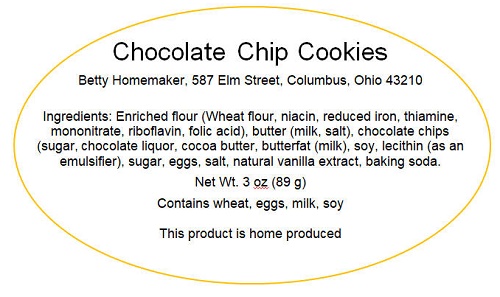
31 Label Law - Labels Design Ideas 2020
How to Navigate the Country of Origin Food Labelling Requirements — Lau ... Requirements that must be met before the Australian country of origin labels can be used. When a food is grown, produced in, packed or made in Australia, it is mandatory that proportion of Australian content be disclosed. Where businesses cannot accurately identify the percentage of Australian content in a food, the claim that the food contains ...

Country of Origin labels slammed for "gaps" and "apps" - Food & Drink Business
Country of origin | ACCC You will find country of origin labelling on most food you buy at the supermarket, local stores, markets, online or from a vending machine. Food bought from restaurants, cafes, take-away shops, schools and caterers does not have to be labelled. Food that was packaged and labelled on or before 30 June 2018 can still be sold without the new labels.

Government's proposed country-of-origin labels leave you to guess where your food comes from
Country of Origin Food Labeling | Jenn David Design The Country of Origin Labeling requirement states that "Food labeling statements regarding geographical origin must not be false or misleading in any particular." So it would be incorrect to state that the cocoa is a product of both Mexico and Chile on the label. You would need two labels in this case—one for each respective country of origin.
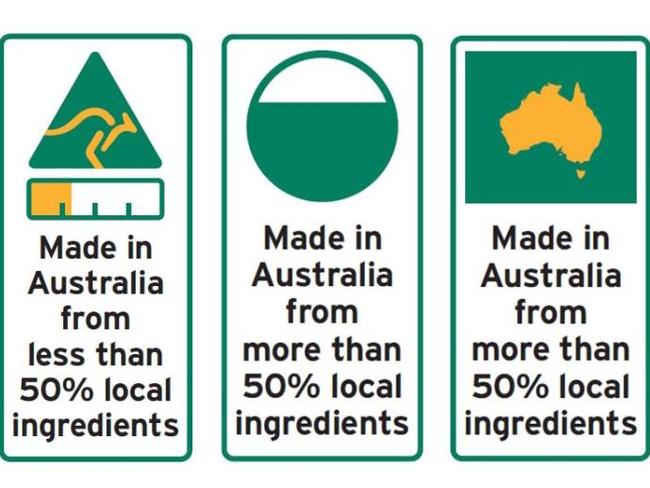
Perth company uncovers where your food really comes from | Daily Telegraph
Country of origin labelling - Food Standards The Australian Government introduced a country of origin food labelling system under Australian Consumer Law on 1 July 2016. Country of origin labelling requirements for food is in the Country of Origin Food Labelling Information Standard 2016, under the Competition and Consumer Act 2010. These requirements became mandatory on 1 July 2018.

USDA approved Ground Pork Nutrition Fact Labels at ScaleLabels.com
Which foods are covered in the country of origin labeling law? Knowledge Article. Foods that must be labeled with their country of origin are: 1. Muscle cuts of beef (including veal), lamb, pork, goat, and chicken; 2. Ground beef, ground lamb, ground pork, ground goat, and ground chicken; 3. Wild and farm-raised fish and shellfish; 4.

Ground Lamb Nutrition Fact Labels at ScaleLabels.com
Food labelling: country of origin - GOV.UK If all these activities took place in a single country, the label 'Origin: [name of country]' is acceptable. For the GB market, 'United Kingdom' is the origin label for beef and veal from both GB...

New Country of Origin Food Labelling Standards to benefit Australian food and beverage companies ...
Origin labelling - Food Safety Origin labelling of the primary ingredient of a food: Article 26 (3) of Regulation (EU) No 1169/2011 requires that where the origin of a food is given and is different from the one of its primary ingredient, the origin of the primary ingredient shall be given or at least indicated as being different to the origin of the food.
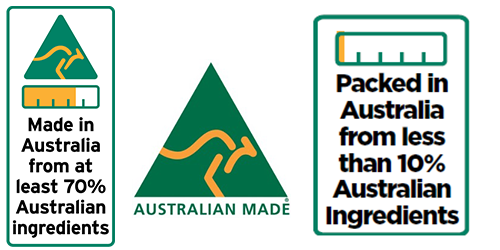
Protecting - Made in Australia – changes to food label requirements now mandatory
Country of Origin Labeling of Agricultural Products While the COOL law contains an expressed exclusion for an ingredient in a processed food item, many imported items still must be labeled with country of origin information under the Tariff Act of 1930. Items that are imported in consumer-ready packages also are required to be labeled with country of origin information.

15 changes that could affect you from July 1 | The Courier Mail
Country of Origin Marking - U.S. Customs and Border Protection This rule applies unless an importer has repeatedly violated the country of origin marking requirements after receiving written notification that the goods are required to be marked prior to importation. Canada, Mexico and the United States may impose special marking duties or penalties for repeated violations of country of origin marking ...
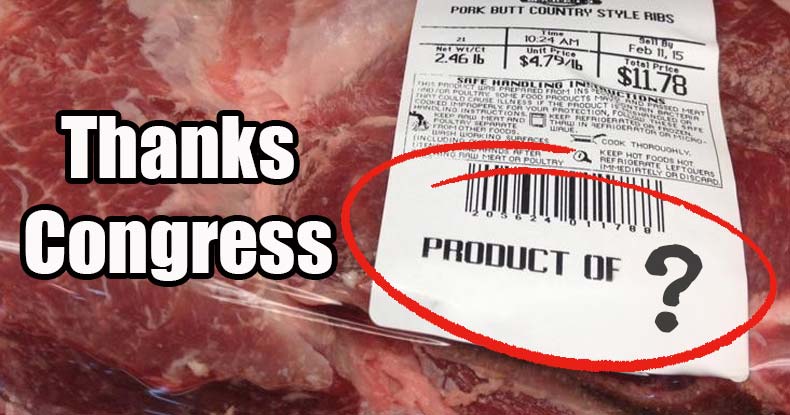
Congress Just Deceptively Nixed Food Label Law – Now You Won’t Know Where Your Meat is From
Marking of Country of Origin on U.S. Imports Acceptable Terminology and Methods for MarkingEvery article of foreign origin entering the United States must be legibly marked with the English name of the country of origin unless an exception from marking is provided for in the law.

Country of Origin Food Labelling: Is your business ready? | Herbert Smith Freehills | Global law ...
Country of origin food labelling | business.gov.au Country of origin labelling is not required on the following food products: foods not for human consumption (for example, pet food) foods sold in restaurants, cafes, take-away shops or schools foods sold at fundraisers foods sold from the same premises in which they have been made and packed.

Australia's getting new country of origin food labels - here's what they look like | Business ...

Australia's getting new country of origin food labels - here's what they look like | Business ...
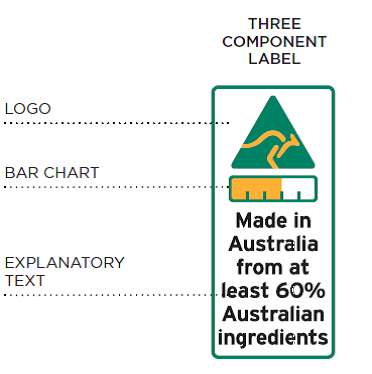
Country of origin food labelling | McKillop Legal


‘Country of Origin’ food labelling - Healthy Kids

Country of origin food labelling to be voluntary, but not always | Food labels, Country of ...
Post a Comment for "38 is country of origin required on food labels"